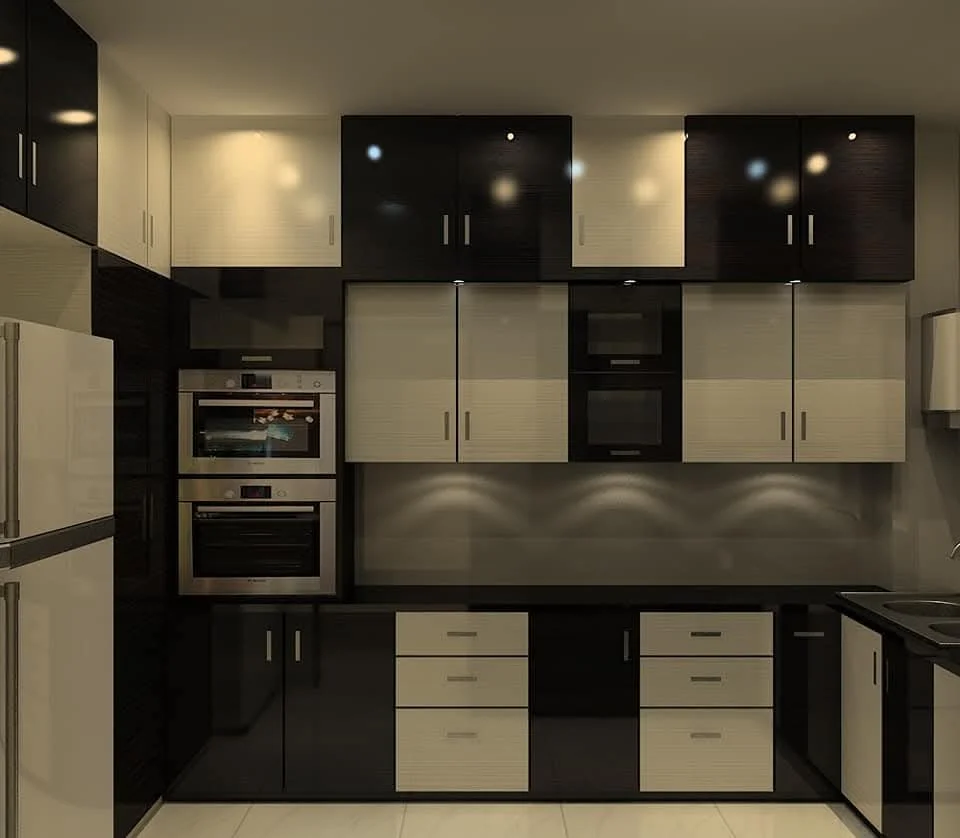
Because a modular kitchen solves the 3 biggest frustrations of a normal Indian kitchen.
1. It actually uses the space :
Old kitchens waste corners, have dead space above cabinets, and no place for 10 different appliances. Modular uses L-shape, U-shape, tall units, corner carousels, so even a 8x10 kitchen in Siliguri feels bigger.
2. It's built for how we cook :
We need separate zones for heavy tadka, grinding, storing masalas, dal, atta. Modular gives you:
- deep drawers for heavy utensils, not deep shelves where you have to bend
- pull-out for oils and spices near the stove
- dedicated chimney/hob space so oil doesn't stick everywhere
- easy-to-clean materials that handle turmeric, steam, water
3. It's repairable and future-proof :
A carpenter-made kitchen is one fixed block. If one shutter swells in the monsoon, you have to break it. In modular, each unit is separate. You can replace one drawer, add a new trolley later, shift the whole kitchen if you move house.
Plus it just looks clean. No open wires, no mismatched laminates. And today a basic modular setup costs almost the same as a good carpenter + materials, but finishes in 2-3 weeks instead of 2 months.
People don't want luxury, they want a kitchen where cooking is faster, cleaning is 10 minutes, and everything has a place. That's why even a small budget home now goes for at least a basic modular.
I can suggest layouts and budget ranges for small, medium and large kitchen if you tell me your kitchen size.
Share this guide